Select Page

The marine engineering design features of the MTU 2000/4000 series propulsion diesel engines

Jan 28, 2026 | Technical Articles | 0 comments

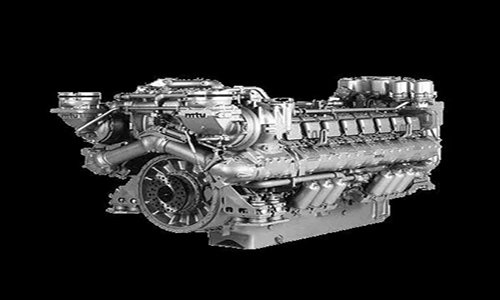
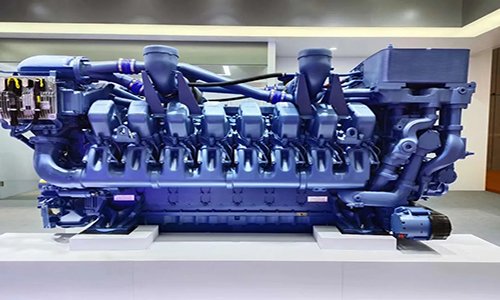
The MTU2000/4000 series diesel engines, designed and launched by MTU of Germany (now renamed Rolls-Royce Power Systems, but still using the MTU brand for its products) at the end of the last century, are widely used in high-speed vessels worldwide due to their high power density, compact structure and excellent reliability.

In addition, due to its low fuel consumption rate and excellent performance that meets various current emission standards, it has also been widely applied in the civilian sector, especially in various high-performance ships.

Since the beginning of this century, various ship design institutes in our country have adopted these two series of engines in large quantities for various civilian purposes, starting from military, military trade and government service vessels such as those for border defense and customs.

These two series of engines are still among the most advanced models in the world at present.

Due to the characteristics of their structure and performance, when these two types of engines are adopted as the main propulsion engines in ship design, there are some technical features that require special attention.

Understanding and mastering these characteristics is of great benefit to better exerting the performance of diesel engines and correctly completing the design work of ships.
I. Characteristics of Marine Engine Design

1. Model selection

The selection of the model is the first problem that the marine engineer encounters.

The MTU diesel engines have a complex range of models and numerous variants. There are strict regulations on which model should be selected for specific applications.

The MTU marine diesel engines are classified into several groups (1A, 1B, 1D, 1DS) based on different applications. The specific application scope of each group is shown in Table 1.
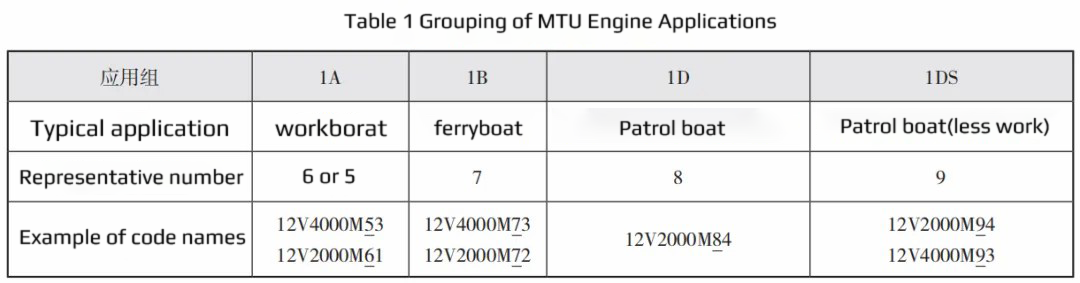
Due to the different purposes of various ship types, the working requirements and intensities of their main engines also vary. Therefore, the models of each application group are actually modified versions of the same basic model based on different uses.

The typical vessel type in Group A is various-purpose work vessels. The main engine operation characteristics of these vessels are that they operate continuously for a long time, have a large number of working hours each year, and often need to operate at maximum power.

Therefore, the required major overhaul interval time is set to be longer in hours to ensure that there are sufficient working years within one major overhaul period.

Therefore, among the four variants of the same model, the 1A group has the lowest maximum power among them.

The fixed-busier ferry is the representative vessel type of Group 1B. Its operation feature is that the power gradually increases when leaving the dock, operates at full power after entering the route, and gradually reduces to the maximum power and then stops when approaching the dock.

Therefore, its main unit can operate at its maximum power for a long time, but it usually only works for 8 to 10 hours a day, and remains in a shutdown state for the rest of the time.

1D and 1DS are the patrol boat and yacht application groups. Their characteristic is that the maximum power usage time is short, and most of the time they use the cruising power. The annual working time of the engine is also short. Therefore, among the four variants, the rated power for the application of 1DS is the highest.

Even though the major overhaul period is relatively short when measured by the total working hours, it can still be used for several years before requiring a major overhaul.

Therefore, in principle, the type of the machine should be selected within the corresponding application group based on the purpose of the vessel; otherwise, it will lead to early damage of the engine.

For instance, if the 12V2000M94 engine from the 1DS group is used as the main engine for a passenger ship, although the power can meet the requirements, the engine will eventually be overloaded and damaged due to the excessive proportion of time it operates at its maximum power.

If the models of Group 1B are used on patrol boats, since they have a lighter load than passenger ships, it is permissible.

The modifications of MTU diesel engines are very complex. Generally, one model can be used for one specific purpose. To be on the safe side, during the model selection stage, clarifications should be obtained through consultation.

2. Power Calibration and Usage

Only by understanding the regulations for power calibration can one use the power correctly.

Since the early 1990s, MTU diesel engines have stipulated that all their main engines should be calibrated with the ISO’s ICFN power, which is the sustainable fuel consumption limit power as per the ISO standard.

Therefore, this is the maximum power that the engine can provide for use, and there is no possibility of exceeding it.

When a ship is required to have an overloaded power capacity, the rated power can only be reduced proportionally as the designed power.

In the 20th century, due to the regulations of our country’s ship inspection, such situations occurred frequently.

So, in fact, because this calibrated power can be continuously used, it results in a waste of the engine’s capacity.

At that time, the design unit, the Chinese Classification Society, and MTU Company often held consultations on individual cases in order to obtain the classification society’s approval for the calibrated power.

Then, in the high-speed ship regulations issued by the classification society in the 1990s, there was no longer a requirement for 110% overload power. Thus, when building ships according to this regulation, this kind of trouble was avoided.

Of course, for ships that insist on being constructed in accordance with the steel marine vessel specifications with overload power requirements, when there is a conflict with the rated power, it can still be resolved through negotiation.v
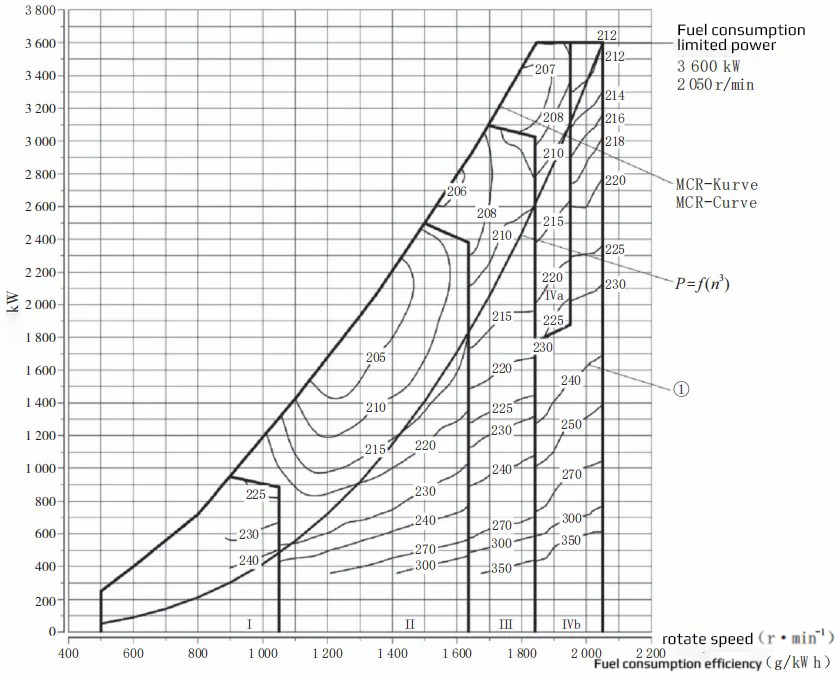
3. Selection of Engine Characteristic Curve and Propeller Design Point Since the fuel injection system of the engine is electronically controlled, the amount of fuel injected at each rotational speed is programmed and set. The characteristic curve of the MTU2000/4000 engine has a maximum power platform, which is formed by adjusting the fuel injection volume. As an example, Figure 1 presents the characteristic curve of MTU20V4000M73L. It can be seen that within the speed range of 1840 to 2050 r/min, the engine can provide a maximum power of 3600 kW.
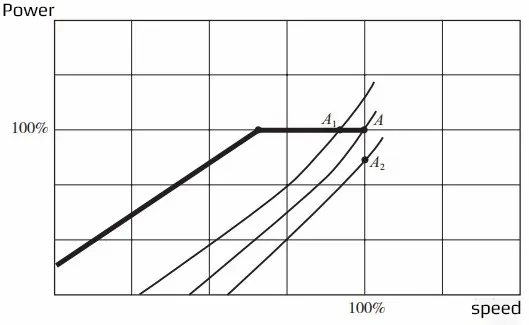
In this situation (as shown in Figure 2), when the design point of the propeller is selected at point A1 on the platform, if the operating point shifts due to fouling on the ship or manufacturing errors of the propeller, the engine can still provide the maximum power value. Especially when the design point is set at point A, since it is the farthest from the left boundary of the engine characteristic curve, it can provide the best ship acceleration. If the engine power is sufficiently abundant, the design point can be set at point A2 below the maximum power. At this point, a slight deviation of the propeller curve will not affect the speed of the vessel [1]. Another characteristic of the MTU2000/4000 series diesel engine’s performance curve is that it still has a relatively high power value in the low-speed range, and the performance curve appears more robust. This is due to the use of sequential supercharging. At low rotational speeds, the exhaust volume is small, and only one turbocharger needs to be activated to boost its efficiency. Only at high speeds do both turbochargers operate simultaneously to generate a large amount of power. Regarding the detailed structure and principle of this pressure boosting system, there are already several relevant documents available in China [2]. Therefore, we will not elaborate on it here. This feature enables the ship to achieve excellent acceleration performance, while also meeting the requirements of certain high-performance ships that have higher demands for power at lower speeds. During low-load operation, due to the improvement in combustion, good performance can still be achieved. Both of these models can operate continuously at a 15% low load for up to 100 hours.

4. High combustion air volume and low cabin heat dissipation

The MTU2000/4000 engine is a highly pressurized engine, but it also has extremely high structural compactness. Therefore, the power output per unit engine displacement is much higher than that of ordinary engines, and the amount of combustion air required is also particularly large.

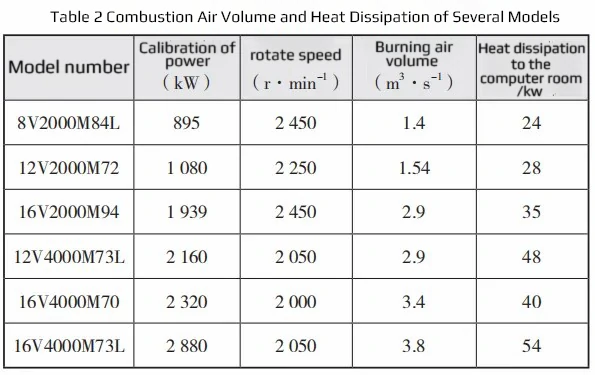
Table 2 presents the combustion air volumes for several models. When designing the engine (especially for the design where the combustion air is drawn from the engine room), special attention should be paid to this.

However, despite the extremely high power output of this engine, its heat dissipation capacity within the cabin is very low (as shown in Table 2). This is mainly attributed to its unique three-layered exhaust pipe design.
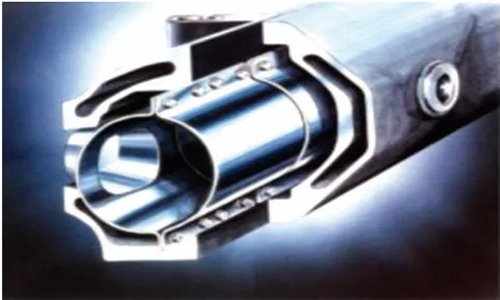
As shown in Figure 3, there is a cavity between the inner channel of the exhaust pipe and its outer wall, preventing the gas inside the pipe from coming into contact with the outer wall and thus blocking the transfer of heat.

The outer wall of the pipe has a lower temperature, which meets the requirements of ship inspection and also reduces the heat loss to the engine room. Therefore, the ventilation volume used for cooling the engine room can be significantly reduced.
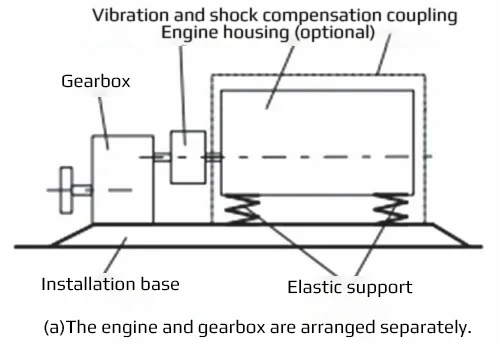
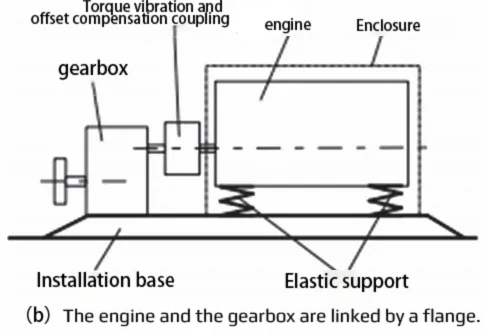
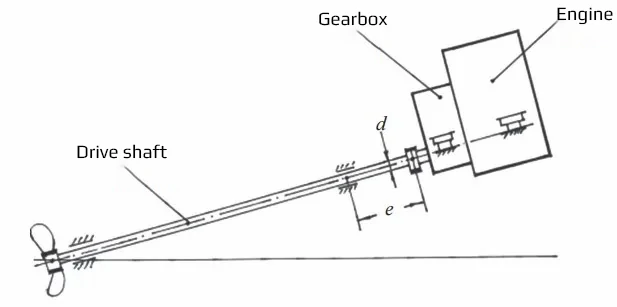
5. Unit Installation The MTU2000/4000 engine is a high-speed machine. To reduce the vibration of the unit, elastic supports must be used. These elastic supports are equipped with rubber elastic elements of appropriate stiffness. At this point, the connection between the gearbox and the engine, as well as the installation on the base, usually adopts the following two methods [3], as shown in Figure 4.
Figure 4(a) shows the separate arrangement of the engine and the gearbox. The engine is installed on the base with 4 elastic supports, while the gearbox is rigidly fixed to the base. The engine and the gearbox are connected by an elastic coupling. When the engine is operating, the relative displacement caused by the vibration of the engine and that of the gearbox is absorbed by this coupling. The thrust generated by the propeller is transmitted to the base through the thrust bearing of the gearbox, and the engine is not affected by this thrust. This is the most common installation method. For smaller models with fewer than 12 cylinders, the installation method shown in Figure 4(b) can be adopted. That is, the gearbox and the engine can be directly connected through the connection flange on the housing, forming a complete unit as a whole. At this point, elastic supports were installed at the front end of the engine and on both sides of the gearbox. When the engine is operating, the entire unit can have vertical and lateral vibrations. When the gearbox is subjected to the thrust of the propeller, the entire unit will experience longitudinal displacement. These movements and displacements can be controlled by adjusting the stiffness of the rubber components in the elastic supports. If there are specific requirements, other structural measures can also be adopted to limit them. For small-sized vessels, it is commonly recommended to adopt the structure where the propeller drive shaft is directly connected to the output flange of the gearbox. This approach can result in the most compact structure and the lowest cost [4]. However, at this point, there is a certain requirement for the flexibility of the transmission shaft. This is controlled by adjusting the ratio of the length of the first bearing of the transmission shaft to the connection flange of the gearbox and the diameter of this shaft segment (see Figure 5). The design must be carried out in accordance with the specific requirements of the guidance materials.
6. Characteristics of the Electronic Control System When these two series of engines are used as the main engines of ships, they all need to be controlled by MTU’s specialized electronic systems. In addition to the on-board control, electronic control systems for the control room and the driver’s cab can also be configured as needed. To achieve the most reasonable cost, the systems with and without ship inspection requirements are treated differently. It is not possible to convert the systems without ship inspection requirements into those compliant with ship inspection by adding items, and vice versa. Furthermore, in addition to the standard configuration, the display, alarm and control items at each control position can have several optional settings. This must be clearly defined during the technical discussion stage. 7. Product Upgrade and Compatibility with Older Products Rolls-Royce Power Systems Company follows the practice of MTU and attaches great importance to product upgrades. Up to now, the MTU2000 series engines have reached their seventh generation, and the 4000 series has also reached its fifth generation. The emergence of the new generation of products is not only for increasing power and reducing fuel consumption. Moreover, the new products developed in recent years are largely designed to meet the increasing demands of emission regulations, seeking a better compromise between reducing emissions and lowering fuel consumption rates. On the other hand, this is also done to meet the needs of new application fields. Due to the fact that different applications have different requirements for emissions, the emergence of new-generation models does not necessarily mean the elimination of older models. That is to say, there is a situation where all generations of products are sold simultaneously. Design units need to pay attention to this when choosing models, so as to ensure the adoption of the most economically and practically suitable models. When upgrading products, special attention should be paid to compatibility with the old products. The installation size and external interfaces should be kept as consistent as possible to facilitate users’ upgrading process.
II. Conclusion The MTU2000/4000 marine engines are mainly targeted at the high-speed vessel market and have been widely adopted in various countries around the world. In our country, since the 1990s until now, the usage quantity of these two series of diesel engines has been increasing significantly. In actual operation, the various ship design institutes in our country have also gradually accumulated a considerable amount of experience in the design of the engines for these two types of ships. This article has comprehensively summarized the key features of these two models, hoping to be of assistance to the relevant marine engine design, thereby enabling the engines to better exhibit their performance and advantages.
WhatsApp Online logo

Sales Team


Marine-SeaMacWhatApp-Icon

Marine Generator-SinoGenWhatApp-Icon

Marine Parts-PartMacWhatApp-Icon

EV System-EVMacWhatApp-Icon


Sales Manager-Mrs.Wendy FuWhatApp-Icon

Sales Director-Mr.Jasper Lee WhatApp-Icon

Shipping ServiceWhatApp-Icon

Contact EMAC Now!

Subscribe To Our Newsletter

Subscribe To Our Newsletter

Subscribe to get the latest updates from www.hangzhou-gearbox.com

You have Successfully Subscribed!

Pin It on Pinterest