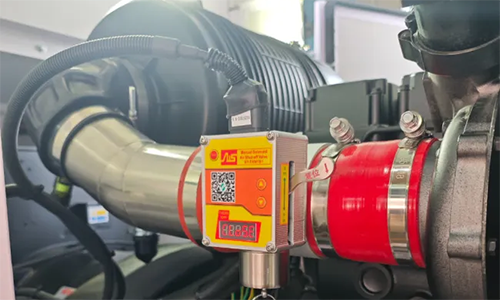
What is a Diesel Engine Overspeed Air Shutoff Valve and Why Is It Important?
A diesel engine overspeed air shutoff valve is a standalone safety protection device specially designed for scenarios where an internal combustion engine experiences overspeed and loss of control. Simply put, it serves as the ultimate safety brake for diesel engines. When a diesel engine runs out of control and overspeed occurs due to fuel supply failures, flammable gas ingestion, or other malfunctions, the valve rapidly cuts off the air intake circuit, forcing an emergency shutdown of the engine. This fundamentally prevents equipment damage and catastrophic safety accidents.
As safety production requirements continue to rise in industries such as fire protection, petrochemical engineering, and marine engineering, traditional diesel engine protection devices usually rely on the engine’s original control system, which carries the risk of protection failure if the main engine malfunctions. Moreover, most such products lack reliable mechanical locking mechanisms and tend to reset automatically under extreme conditions, posing severe safety hazards. As an independent final safety barrier, the diesel engine overspeed air shutoff valve has seen growing demand across industries.
Analysis of Working Principles: How Does the Diesel Engine Overspeed Air Shutoff Valve Provide Safety Protection?
The core function of the diesel engine overspeed air shutoff valve is to quickly cut off the air intake for emergency shutdown when the engine speed is out of control, while preventing accidental restart through mechanical locking. Its complete working process can be divided into four steps:
Working Process of the Diesel Engine Overspeed Air Shutoff Valve
- Real-time Speed Collection: An independent speed sensor collects signals from the engine flywheel ring gear, independent of the diesel engine’s original control system, eliminating protection failure caused by main engine malfunctions.
- Overspeed Logic Judgment: The control unit compares the real-time speed with a preset threshold. When the speed exceeds the safe range of 10%–20% above the rated speed, a protection action is triggered immediately.
- Rapid Air Intake Cutoff: The actuator drives the valve disc to quickly close the air intake passage, cutting off the air required for diesel engine combustion and achieving emergency shutdown within 3 seconds.
- Mechanical Locking Protection: After closing, the valve is locked by an external mechanical structure and can only be reset manually. This completely prevents accidental valve opening caused by power outages or vibrations.
Typical Structure of the Diesel Engine Overspeed Air Shutoff Valve
A typical structure consists of five core components: the valve body, sealing valve disc, speed detection module, actuation drive mechanism, and mechanical locking & reset mechanism. Products with different drive modes feature slight structural variations to adapt to the requirements of various application scenarios.
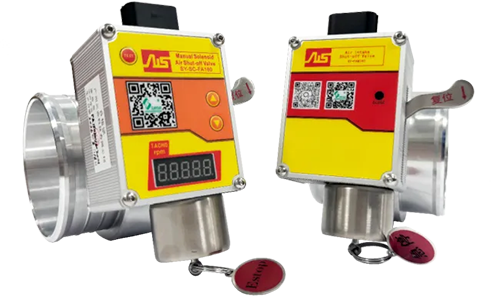
Comprehensive Evaluation: Advantages and Application Notes of Diesel Engine Overspeed Air Shutoff Valve
Compared with traditional diesel engine protection solutions, the diesel engine overspeed air shutoff valve boasts significant technical advantages:
Independence: Adopts an independent detection and control circuit, which does not rely on the main engine control system. It can normally trigger protection even if the main engine completely fails, complying with the mandatory requirements of industry standards for independent protection.
Reliability: The all-metal hard seal design eliminates the risk of aging and detachment of traditional rubber seals. The mechanical locking structure remains effective even in high-temperature and high-vibration environments.
Adaptability: Supports various drive modes such as electronic control, intelligence, explosion-proof, pure mechanical, and pneumatic, meeting the operational requirements of different scenarios.
In the current industry, the core challenges of diesel engine overspeed air shutoff valves lie in the high technical threshold for production and stringent compliance requirements. Non-compliant products produced by small manufacturers still pose potential safety hazards. The following notes should be observed during use and maintenance:
- It is mandatory to select special products that comply with the corresponding national standards of the industry, avoiding products modified from ordinary fluid valves
- Conduct regular simulated overspeed tests to verify the functional effectiveness of the device and troubleshoot fault risks in advance
- For flammable and explosive explosion-proof scenarios, products with official explosion-proof certification must be selected to meet compliance requirements
Key Application Scenarios of Diesel Engine Overspeed Air Shutoff Valve
The diesel engine overspeed air shutoff valve has been widely applied in multiple core fields with extremely high safety requirements:
Diesel engine fire pump set scenario: Diesel engine fire pumps are mostly designed for unattended operation. If a speed failure occurs due to fuel system malfunction, it may cause cylinder explosion of the pump body or even explosion in the pump room. The diesel engine overspeed air shutoff valve can independently complete protection shutdown, complying with the mandatory national standards such as GB 6245, and is an essential safety device for fire pump sets.
Petrochemical explosion-proof scenario: In flammable and explosive places in petrochemical parks, diesel engines are prone to overspeed due to invasion of combustible gas. Explosion-proof diesel engine overspeed air shutoff valves can be linked with combustible gas detectors to actively cut off the air intake, fundamentally avoiding secondary explosion disasters.
Marine power scenario: Large marine V-type diesel engines mostly adopt multi-intake manifold design, requiring high-precision synchronous shutdown of multiple air shutoff valves. Professional diesel engine overspeed air shutoff valves can achieve synchronous linkage of multiple valves, meeting the safety protection requirements of marine power systems.
Technical Practice and Future Outlook: Development Directions of Diesel Engine Overspeed Air Shutoff Valves
So, how can these advanced technical principles be translated into stable and reliable industrial solutions?
As a national-level high-tech enterprise and “Specialized, Refined, Differential, Innovative” enterprise focused on the intelligent control and safety emergency response of internal combustion engines in China, Guangzhou Sanye Technology Co., Ltd. has been deeply engaged in the field of diesel engine overspeed protection for 27 years. Its core product, the AIS diesel engine overspeed air shutoff valve, is a mature practical achievement of this concept.
This product eliminates reliance on external control systems through independent magnetoelectric speed detection technology, and addresses the industry pain point of aging and detachment of traditional rubber seals with its elliptical bevel all-metal hard seal design. It also achieves full-scenario coverage, including electronic control intelligent type, explosion-proof type, pure mechanical type, and pneumatic type. The valve supports synchronous shutdown of up to 10 air shutoff valves with a timing accuracy of less than 8 milliseconds, reaching the leading technical level in China.
As a professional manufacturer of diesel engine overspeed air shutoff valves, Guangzhou Sanye Technology provides customers with standardized products and customized solutions, as well as complete user manuals, localized technical support, and technical training services. All products comply with national and industry standards such as GB 6245 and T/CECS 718, and have served over 100 benchmark projects in multiple fields including aviation, fire protection, petrochemical, and marine engineering.
In the future, diesel engine overspeed air shutoff valves will continue to develop in the directions of intelligence, lightweight design, explosion-proof performance, and full-scenario adaptability. Combined with technologies such as remote condition monitoring and active safety linkage, they will provide a more reliable safety barrier for power systems in extreme environments, helping all industries strengthen their safety production defenses.